微信内可能无法直接打开本站。请点右上角 ··· → 在浏览器打开,或复制链接。
Umi Ishihara's 'Nocturnal Animals' Have Escaped the Strip Club
RSS 官方收录 · 可信分层展示
关键摘要
SummaryUmi Ishihara’s 'Nocturnal Melody' follows two Tokyo dancers, Eri and Catalina, exploring nightlife, labor, identity and belonging.…
- Inspired by Japan’s wild bear reports, Ishihara uses “nocturnal animal…
- The film balances discrimination and instability with joy, solidarity …
- Words by Gabrielle LeungEri grins at the screen, ticking off the thing…
摘要引擎:抽取
正文提要
Summary
Umi Ishihara’s 'Nocturnal Melody' follows two Tokyo dancers, Eri and Catalina, exploring nightlife, labor, identity and belonging.Inspired by Japan’s wild bear reports, Ishihara uses “nocturnal animals” as symbols for people pushed to society’s margins.The film balances discrimination and instability with joy, solidarity and community, extending into parties and live events around the exhibition.
Eri grins at the screen, ticking off the things she cares most about with her fingers. She is one of two dancers, alongside Catalina, who feature in artist Umi Ishihara's newest film installation Nocturnal Melody, originally commissioned and produced by Gasworks, London.
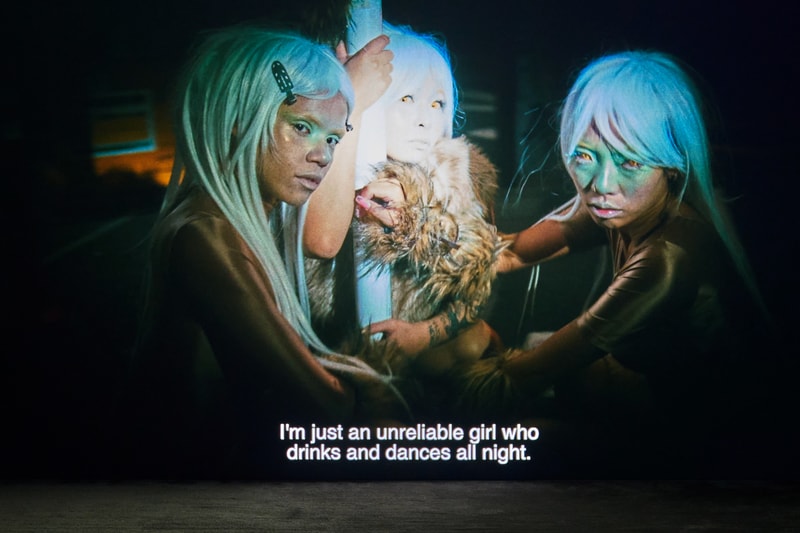
Shot across Tokyo, the 24-minute film follows Eri and Catalina through their work at a gentleman's club in Shibuya, offering a glimpse into the complexity of their lives and the roles they occupy. Ishihara mixes documentary-style footage from the strip club with night-vision shots and staged scenes featuring her own cast of "nocturnal animals."
Growing up around Japan's free rave scene in the 1990s, Ishihara was surrounded by the kinds of people who shape underground nightlife: DJs, party organizers, dealers. Her upbringing shows up in the way the film is centered. Nocturnal Melody lingers in uncertainty — in the everyday labor and emotional survival that sustain people within these spaces, but just as powerfully in the joy, confidence and community it makes possible.
The idea of the nocturnal animal was inspired by news reports of wild bear attacks in Japan. "It was really interesting because there are two completely different perspectives," she recalls. "One is like, the wild bear is a protected species and they're pretty and beautiful — you can't kill them. Then on the other hand, humans are dying. There was one incident when this wild bear went to a kindergarten and tried to kill all the children."

"Half playful, half threatening, the women act as stand-ins for those pushed to society's edges."
This tension between protection and threat, and belonging and exclusion, surfaces in Ishihara's imagined nocturnal animals. She describes them as figures "living inside the strip club but released during the night, and probably, eating men." Shot in a single take, the women roam the streets of Tokyo, their presence drawing attention from passers-by who film them on their phones. Half playful, half threatening, the women act as stand-ins for those pushed to society's edges — seemingly strange, defiant, and bound together through shared differences.
Eri and Catalina's stories carry much of the emotional weight. Both speak with an openness about instability and not fitting into social circles. "I grew up in a super rural part in Yokohama," Catalina says in the film. "There weren't many other mixed-race kids. People gave me weird looks. I was bullied and discriminated against as a 'foreigner.'" "I was an easy target for bullies," adds Eri. "But I could never tell my parents. I was the type of kid who would put on a happy face when I walked in the door."
The film edges towards darker territory — the awareness of their job's temporality as they age, the uncertainty of the morning, risky encounters ("I got busted and ended up on the news," Catalina says). Yet Ishihara resists dwelling there. "The original plan was to explore a bit more of this 'dark side,' but during the filmmaking and hanging out with these two girls, I realized they're so positive," explains Ishihara. "And I realized we have no time to be sad because these two girls are so positive, so happy and just super fun people. I waste so much time being angry and sad. But encountering these two amazing girls… I became a really happy person."
At times, the film slips into poetic monologue. Ishihara references a world where discrimination, violence and war feel increasingly normalized. "So many things happen in the world and you can't cover everything," she says, "but for me, it's very attached because of where I used to work and the people I am surrounded by. And this poetic monologue in the film is when people notice us, people who could be discriminated against due to racism or class, when our presence makes them feel danger. This is kind of my stance of solidarity for these people."
Even the way Ishihara presents the work reflects this sense of, or longing for, collective belonging. She hosts parties alongside her exhibitions, treating them as an extension of the artwork itself. "When I have a film release or a solo show, I always do parties, which kind of relate to my work because music is one of the most important parts of my work," she says. "Filmmaking is similar to organizing a party. You just gather people and ask them to play music or be in front of the camera."
Ishihara held an event at London's Ormside Projects to celebrate Nocturnal Melody, inviting DJs and pole dancers to perform throughout the night, with appearances from Eri and Catalina themselves. She plans to set up a night when her exhibition opens in Manchester this autumn. "But something a bit different, maybe more local dancers," she hints.
Umi Ishihara: Nocturnal Melody is touring from Gasworks, London, to esea contemporary, Manchester, where it will be presented from October 10, 2026, to January 17, 2027. The film will also be included in the Busan Biennale, on view from August 29 to November 1, 2026.
Click here to view full gallery at Hypebeast