微信内可能无法直接打开本站。请点右上角 ··· → 在浏览器打开,或复制链接。
5 Things I Still Believe Are True About Ultrarunning
RSS 官方收录 · 可信分层展示
关键摘要
I’m not saying I’m good at trail running or ultrarunning; I’m just saying I’ve learned some things in the past decade or so of doing it.…
- I’ve put in a few miles and finished a few races—a few 100-milers, a f…
- So what are some things I’d tell myself, if I could travel back in time?
- Here’s a short list.
摘要引擎:抽取
正文提要
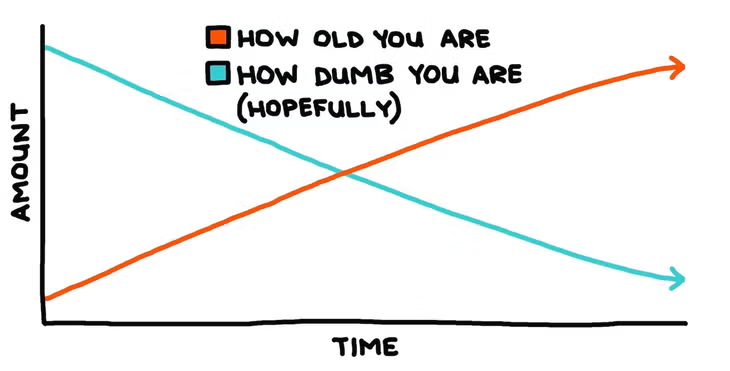
I’m not saying I’m good at trail running or ultrarunning; I’m just saying I’ve learned some things in the past decade or so of doing it. I’ve put in a few miles and finished a few races—a few 100-milers, a few 100Ks, a few self-supported 50-milers and 100K efforts—and as with anything in life, you hope as you get older and more experienced in something, you get wiser, or at least less dumb.
So what are some things I’d tell myself, if I could travel back in time? Here’s a short list.
1. You Pack Your Fears
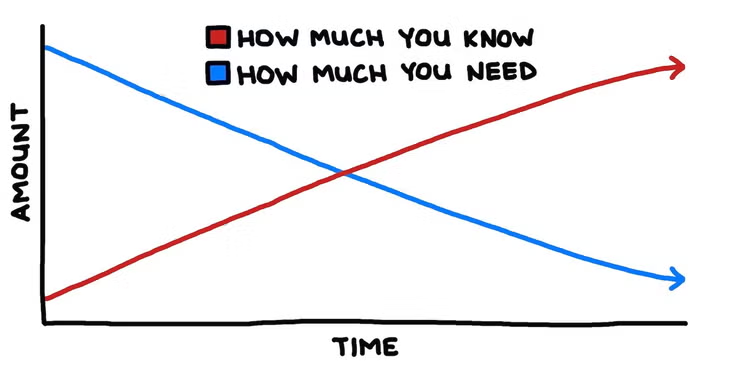
As a longtime backpacker/climber/hiker/backcountry traveler, as well as someone who’s struggled with anxiety, you might think I would have known this tip at the start of my ultrarunning career: You pack your fears and anxieties. Put more simply, the more you worry, the more stuff you bring.
When I was training for my first 100-mile race, I carried way too much food, ate way too often on long runs, worried way too much about electrolytes, put way too much stuff in my drop bags, overdressed way too much in colder temperatures, and in general just freaked out way too much about all the things that could go wrong in a race.
It’s been a hard lesson in both running and life, but I’m finally starting to learn that just because you worry about something and put it on your mental list of “Things That Could Go Wrong,” it doesn’t mean it’s not going to happen anyway. Worrying about all that stuff had a sort of cumulative effect of making me feel like I wasn’t ready or qualified to run long distances, and that just wasn’t true.
I have learned that it’s usually just fine to run out of water a few miles from the end of a long run, and maybe I don’t necessarily need to take in calories every 60 minutes. I pack less, and it’s fine.
2. Walking Is Running
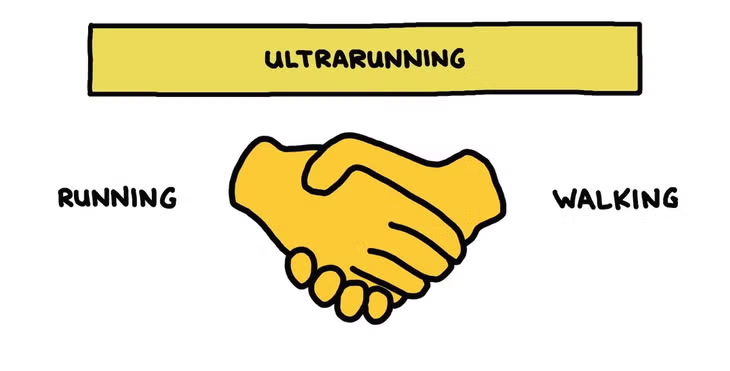
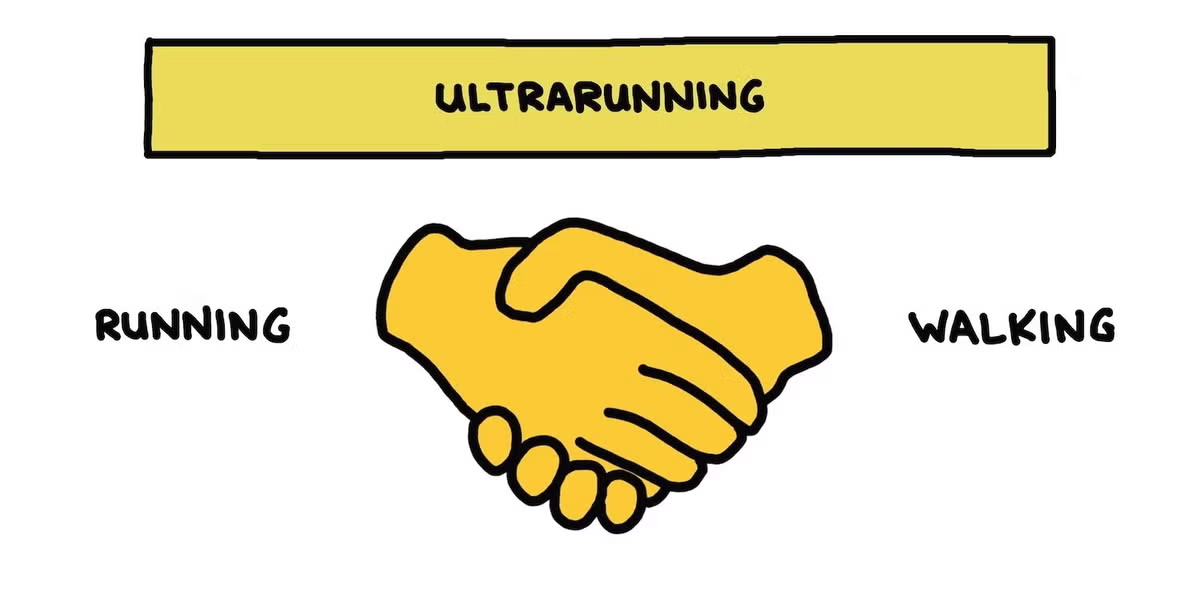
Whenever someone who doesn’t run expresses disbelief that people could run 50 miles, or 100 miles, I quickly point out that it’s not like a half-marathon race, where you’re running as fast as you can for 13.1 miles. You run as much as you can, and you hike the uphills, and sometimes in the really long races, you walk some of the stuff that’s not uphill because you’re eating a slice of pizza or re-packing stuff in the pockets of your vest or re-applying sunscreen or de-layering or maybe it’s mile 84 and you just don’t feel like running for a few minutes. Even the fastest ultrarunners in the world hike/walk parts of races. So, essentially, THEY’RE JUST LIKE US. Except, you know, moving way faster, all the time.
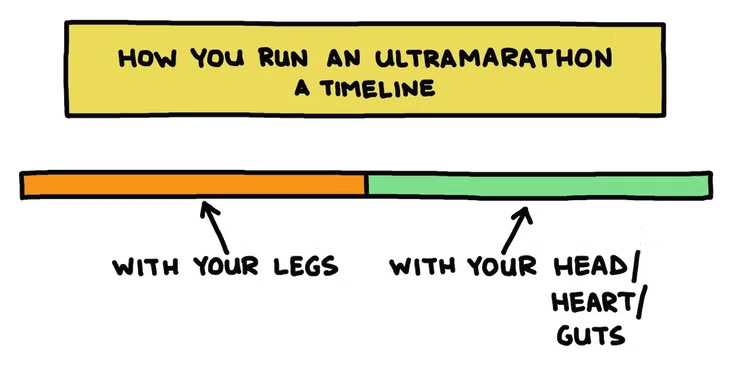
3. You Run the First Half with Your Legs, and the Second Half with Your Head/Heart/Guts
In training for my first 100-mile race, I found a plan and tried to run as many of the miles as I could, which was reasonable, but still, a lot of miles. In the days leading up to the start of the race, I felt creaky and old, like something was about to crack, snap, or rip in half.
I finished the race—not quickly, but I finished. The next 100-miler I ran was sort of last-minute (long story), and I had much less time to prepare, definitely not enough time for a full 24-week training plan. I kept running, did as many miles as reasonably possible, and scheduled one 52-mile long run a few weeks before the race.
Despite a very “Oh No, Final Exams Are Next Week?” sort of training plan, I did just fine. I learned, as many people have before me, that the training is important, but the mental part—knowing what you’re getting yourself into, and knowing that you’ve survived long and/or similar distances in the past—is immensely helpful, too. You’re not going to train for a 100-mile race by doing a 100-mile trail run beforehand, so anything longer than your longest training run you’re going to have to run with your head and heart.
To be completely honest, I did hear about this “first half legs, second half guts” concept somewhere before my first ultra, but it didn’t really sink in until I had run a few races, especially the really long ones. If I were to edit it to be accurate to my experience, it would probably be more like “you run the first 80% with your legs, and the last 20% with your guts.”
4. There Are No Rules
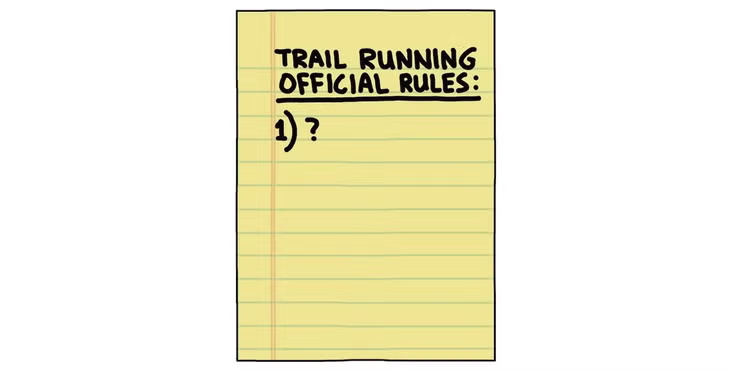
Some people like zero-drop shoes; some people like big cushy shoes. Some people hate running with poles; some people love poles. Some people hire coaches; some people don’t. Some people take a very serious, calculated approach to their running and are results-oriented; some just love running around in the woods for many, many hours.
If you do exactly what a very successful runner does, it might work, but it probably won’t work in the same way it works for that very successful runner. If you’re having fun, you’re probably doing it right.
Alternatively, if you are not having fun, but not having fun is how you have fun, you’re probably doing it right, too. There are no rules. I mean, there are rules in races, like, you know, you can’t jump in your friend’s car and have them drive you around the tough section from mile 62 through mile 81 so you can have fresh legs for the final miles. But for trail running in general, there are no rules.
5. You’ll Figure it Out
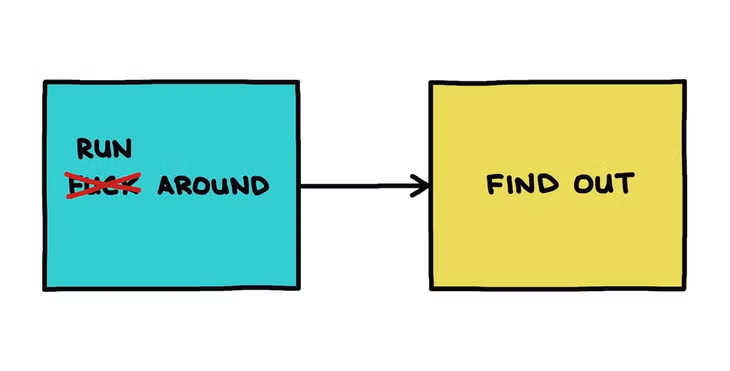
You can sweat every detail. You can spend all your waking non-work, non-running hours watching YouTube and reading every post on trail running and ultrarunning subreddits. You can follow every running social media personality you can find in hopes of getting all the right answers. Or you can do none of that stuff and just go run on a trail. Either way, you’ll get some knowledge, have an experience, and hopefully enjoy it.