微信内可能无法直接打开本站。请点右上角 ··· → 在浏览器打开,或复制链接。
Steep Grades, High Stakes Mark Lauren Gregory’s OCC Debut
RSS 官方收录 · 可信分层展示
关键摘要
Even when Lauren Gregory was winning cross-country meets for Fort Collins High School, her favorite time to run was the summer, when she and her teammates would grind up the steep hills of Horsetooth Reservoir.…
- The hills, which greet runners at the start like a judgy aunt at a fam…
- But Gregory loved going up, up, up so much so that her competitors did…
- “I was just doing what everyone else was doing,” Gregory says of her f…
摘要引擎:抽取
正文提要
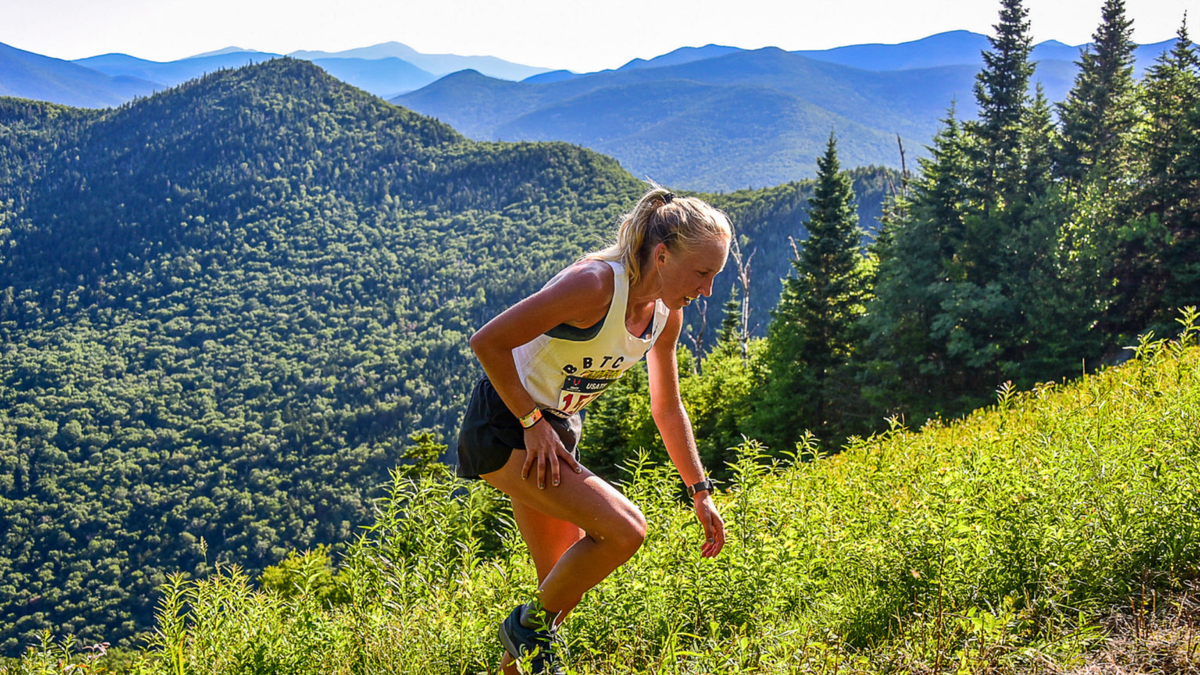
Even when Lauren Gregory was winning cross-country meets for Fort Collins High School, her favorite time to run was the summer, when she and her teammates would grind up the steep hills of Horsetooth Reservoir.
The hills, which greet runners at the start like a judgy aunt at a family reunion, famously make the Horsetooth Half one of the tougher half-marathons in Colorado. But Gregory loved going up, up, up so much so that her competitors didn’t stand a chance on Colorado’s famously hilly state championship course: She won three state titles and finished runner-up in her four years.
“I was just doing what everyone else was doing,” Gregory says of her first days on the hills of Horsetooth. “But as high school went on, those were the days I would look forward to the most. That was how it started.”
That seed blossomed at a Nike running camp she attended as a high school junior. She was already one of the top high school runners in the country—she would also eventually win four state titles in track—and the idea was to sharpen her skills and grab the attention of some DI programs. Instead, the camp changed her life. Under the shadow of Mount Hood, it introduced her to mountain running. Mountain running reminded her how much she loved running uphill.
“I didn’t even know you could do that professionally,” Gregory said. “I didn’t even know how much they got paid. I didn’t care. I decided right then that was what I was going to do with my life.”
That decision appears to be paying off. She’d already established herself as one of the top mountain racers in the world when she had a breakthrough in late July, winning the toughest 50K in the country, the Speedgoat, with the second-fastest female time ever. Now, at 27, she hopes to do well in the OCC, a 37-mile race in the prestigious UTMB World Series that, just like Speedgoat, is a tad hilly.
The results stand out even more when you consider that Speedgoat was only Gregory’s second-ever 50K, and her first was in late April.
“I definitely want to podium, if not win, OCC. That’s in my brain. But I have to go experience it first.”
Before this year, Gregory was intimidated, even spooked, by any race longer than two hours. She constantly referred to herself as a “sub-ultra” runner, as if she needed to point out, specifically, that she wasn’t ready for the longer distances.
Even now, even after smashing Speedgoat, she remains cautious about longer races. She says she will “give it her all” at OCC but doesn’t expect to win or even podium.
“I think in the U.S., we generally don’t have that many vertical races,” Gregory says. “Speedgoat was encouraging for sure. But at OCC, the field is so deep, and you’re battling the course and yourself constantly. I know that OCC requires a certain amount of patience.
“I definitely want to podium, if not win, OCC. That’s in my brain. But I have to go experience it first.”
The Disappearing Act
At the University of Arkansas, where she ran track and cross country, she would vanish over the summer. Not even the Razorbacks’ legendary coach, Lance Harter, knew where she was most of the time. This is a bit unusual for such a top program, where many coaches require their athletes to send in Strava reports.
But Harter seemed to know that Gregory’s version of summer fun wasn’t her on the beach with her toes in the sand. She was either out climbing 14ers with her younger brother, James, or having fun with her friends on the thousands of trails that wrap around Colorado like a serpent—places without a phone signal. She would even compete in the 2022 World Mountain and Trail Running Championships in Thailand in between seasons at Arkansas. That’s a good way to stay in shape over the summer.
“Trail running was, and is, my favorite expression of running,” Gregory said. “It takes the boring metrics out of it, and you can just run. It felt more like an adventure. That became my version of summer training.”
“[Harter] didn’t care as long as I showed up fit. He learned early on that I needed some freedom and space.”
The results, after all, spoke for themselves: She was a seven-time All-American in her six years, helped lead Arkansas to SEC cross country conference titles every year she competed, and was a silver medalist her senior year in the NCAA Indoor Championships in the 3,000 meters.
Gregory graduated in 2023. Nike signed her to run track, which was a risk, considering that she was coming off a navicular fracture in her right foot. She sustained the injury during the indoor mile, ending her career at Arkansas and taking her a year to recover.
She actually had the same injury in her left foot while she was in high school in 2015.
She came back a year later, in 2024, determined to make it as a track athlete. She built up to the finals of the Olympic Trials 5K and, as she lined up, she felt “like a poser.”
“I struggled,” Gregory said. “I had realized by then that being a professional track athlete wasn’t for me. I felt isolated. I wasn’t into the trials mentally.”
She didn’t care enough about track, she realized, to grind the hours she needed to be one of the best in the world. The pain didn’t bother her, and neither did the workouts. It was the setting. Instead of the U.S. Olympic Trials, she really wanted to be at the Broken Arrow Skyrace going on that same weekend. She wanted to be running uphill. She wanted to be on rocks and dirt, with a meandering path, not an oval that made her feel like a hamster. She wanted to be that girl in her junior year in high school, promising herself that she would run mountains for a living.
Nike shifted her to its ACG division that same year. By the end of 2025, she won the Golden Trail World Series Final and finished third in the overall standings. She was right at home on the trail. The trail had been her home all along.
Feeling Exposed
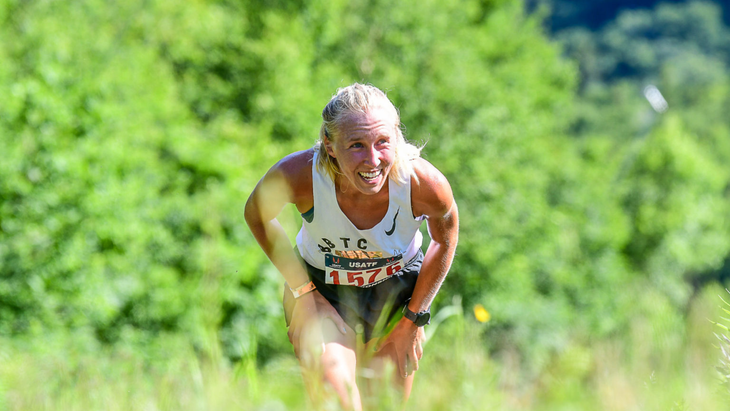
Gregory and her coach, Ben True, both have a saying: The track doesn’t lie.
“I feel very exposed out there,” she says.
This is why Gregory, after all that talk about loving the mountains, considers the track a key to her training. The days of running solely like a feral marmot in the mountains are over for competitive dirt runners. The track, with its flat, friendly terrain, allows no excuses for runners. Your times are, in fact, your fitness.
“You can’t get away anymore with not doing speed work or not being fast,” Gregory says.
This doesn’t cause her as much consternation as you might think. Gregory doesn’t mind the track now that she knows she’s not glued to it. In fact, she enjoys it now more than she did while working for the Olympic trials. The track is now a tool, not a prison.
“I’m very comfortable out on the track and on the roads,” Gregory says. “We do a lot of threshold flats. I do a lot more of that than a typical trail runner.
“Basically, we treat me as a runner, and then we add in trail.”
Gregory, in fact, trains with True, a road-running legend who holds the American record in the 5K. She picked him for his speed, sure, but also for his skill as a Nordic skier, which gave him an understanding of trail runners that other track coaches may not have. True coaches the men’s cross country team at Dartmouth but also coaches track athletes as well as distance runners, even ultrarunners, privately. Gregory found him right after graduating from college through a guy she was dating and called him “an easy pick.”
“He understood the general energy systems that you need on the trail,” Gregory says. Gregory says that based on how True found and addressed her weakness right away, which was, ironically again, an aerobic base. Competing as a track athlete, especially in college, favors athletes who can blow out their engine week after week, like drag racers, Gregory says.
“He addressed me as a whole person and runner,” she says. “How can we bolster the endurance while maintaining raw speed and talent? In general, that’s been the progression as I’ve [gone] from college into the more serious pro world.”
That meant spending a lot of time on the track. It still does.
“My philosophy is being as fit as you possibly can,” True said, “and for her, a lot of track workouts are the thing for that.”
The track workouts increase her turnover and foot speed, a crucial component of running downhill (all that up, after all, does have to go down). But they also help her climb, True said. Speed matters on most hills, which tend to be less than 10% gradient, even when they feel like Everest to an age-grouper. Most races, including Speedgoat, do feature pitches of 20-30%, but they aren’t huge portions of the course.
“I’m OK with her losing seconds in a super steep climb if she can gain them on a smaller climb,” True says. “And remember, half of the race is downhill.”
“Humble” 50K Beginnings
The 50K distance gave Gregory butterflies—she’d never even run a marathon—until True talked about strategy with her.
Her first, UTMB’s Canyons Endurance Runs 50K on April 24, “humbled” her, she said, though she was second female and ran 3:51 (we should all be so humbled). Speedgoat was the true test, not only as a way to prep for OCC, but also as a way to see what she could do on a course that was difficult, yes, but one that suited her abilities because of the extreme elevation gain.
“We picked Speedgoat because we knew a lot of talented women had done it,” True says. “It was a good yardstick.”
True told her to hang with experienced women who knew the course and not to go out too fast. But most of all, he told her to think of it as just another race: The tactics, he said, weren’t much different than a 1,500, even if the distances and terrain obviously were.
“She had to learn that on the trails everyone has their own strength and weaknesses, and the person who wins is the one who can complete the entire distance the fastest,” True says. “We agreed that she could get dropped in the beginning, even giving up a few minutes at first, but if she kept running her race, she would win by a huge margin at the end.”
Gregory, despite her nerves, did believe in herself. Both she and True expected her to run under six hours, and she felt good that day. Her legs, she said, “showed up.”
True thinks she could have run faster than her 5:56 had the day not been so hot. Gregory isn’t as certain, but she admits Speedgoat brought her some 50K confidence.
“Speedgoat showed me, maybe, at the extent that I could be good at this,” Gregory says. “It made me want to keep trying it, even as I respect the distance. It surprised me that my engine could go that long and be that strong.”
Gregory still considers herself a “sub-ultra” runner, she said, and doesn’t have any immediate plans or desire to run farther than a 50K. And yet, her long-term goal, True says, is UTMB. Yes, the big one. Or is it? Gregory admits she can’t see herself doing that distance in the near future.
“Maybe I need to talk to Ben and update him on my life goals,” she said, laughing.
Regardless, this year’s performance at the 50K makes it seem possible.
“That’s the epitome in her mind,” True says. “It will take years, but that’s the transition she could make.”
That means more time on the trails. Probably. Gregory doesn’t mind the time on the track. She trains more like a road marathoner because she knows that her reward awaits her on the weekends, when her long runs can be, and should be, in the mountains.
“It’s the best part of being a pro trail runner,” Gregory said.